
Kendall and Bexar County Estate Planning
Texas Estate Planning Blog

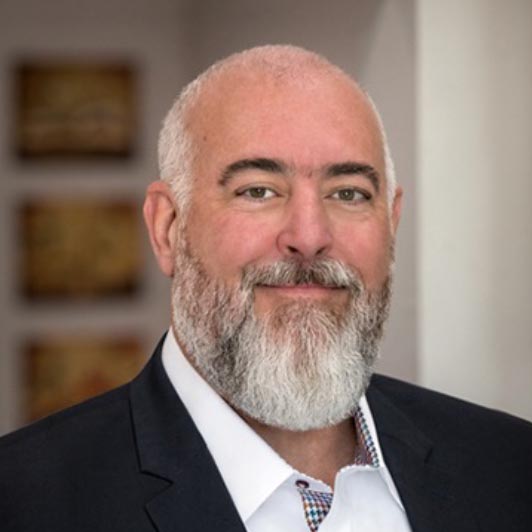
Shawn McCammon is the founder and managing shareholder of McCammon Law. Shawn has been practicing for over 20 years, starting off in litigation before working in-house as a corporate attorney, and finally opening his own firm in 2009.
Every adult in Texas has a plan. If you have not written one, the state has written it for you, and its version is built around biological and legal relatives.
That is the practical starting point for estate planning for same sex couples in Kerrville and across the Hill Country. The question is not whether your relationship is valid. It is whether the right person has written authority at the moment someone asks to see it, in a hospital hallway or at a bank counter.
Three defaults do most of the damage, and each one can be overridden with paperwork.
Medical decisions. If you cannot communicate and have not named an agent, Texas law provides a priority list of people who may consent to treatment: your spouse, then your adult children, then your parents, then your nearest living relative. A partner you are not married to does not appear on that list at all.
Inheritance. If you die without a will, Texas distributes your property to relatives under a statutory formula. An unmarried partner receives nothing, regardless of how long you were together or whose name is on the mortgage.
Funeral and burial decisions. Texas sets a separate priority list for who controls what happens to your remains. It begins with a surviving spouse, then adult children, parents, and siblings. Again, an unmarried partner is absent.
1. A will. This names who receives your property, who serves as executor, and who you nominate as guardian for minor children. For couples whose extended family may be unsupportive, clear drafting matters as much as the contents, because ambiguity is what gives a disgruntled relative something to argue about.
2. A revocable living trust. Property held in a funded trust passes outside of probate, which keeps the transfer private and off the public court record. For couples who would rather not have their finances and relationships reviewed in an open courtroom, that privacy is often the main appeal.
3. A medical power of attorney. This names the person who makes healthcare decisions if you cannot. It replaces that statutory priority list entirely, which is the difference between your partner deciding and a relative deciding. Pair it with a directive to physicians, often called a living will, which records your own wishes about end-of-life treatment.
4. A statutory durable power of attorney. This covers finances rather than healthcare: paying the mortgage, managing accounts, dealing with insurance. Without it, your partner may need to ask a court for authority, during a period when bills do not pause.
5. An appointment of agent to control disposition of remains. This is the document most couples have never heard of, and the one that prevents a painful situation. It lets you name who makes funeral and burial decisions, overriding the statutory list. Families who were distant for decades have shown up at exactly this moment.
These documents carry more weight when there is no marriage, because there are no defaults working in your favor at all. Partners without a marriage have no automatic right to inherit, to decide medical care, or to be consulted about anything.
One Texas detail is worth raising with an attorney. Texas recognizes informal marriage, sometimes called common law marriage, when specific conditions are met. Whether a particular couple qualifies depends on facts rather than assumptions, and the answer changes what the defaults would be. It is better to know than to guess.
Property titling also deserves attention. How a shared home is held determines whether a surviving partner can remain in it, and that is a question of the deed rather than the relationship.
When only one partner is the legal parent, the other partner's relationship with the child may rest on nothing enforceable. Establishing legal parentage, usually through adoption, is the clearest protection available and is worth discussing early rather than later.
A will can nominate a guardian, and courts give real weight to that nomination, though it does not bind a judge by itself. Trusts can also provide for a child while keeping control over how funds are used and by whom.
Most couples finish this work in a single set of appointments. The documents are standard, and the value comes from naming the right people and keeping copies where they can be found quickly.
Attorney Shawn McCammon and the team at McCammon Law, P.C. work with couples and families in Boerne, Kerrville, San Antonio, New Braunfels, and the surrounding Hill Country on wills, trusts, powers of attorney, and probate. To request a consultation and review which of these five documents you already have, we are glad to help. Get a free consultation to learn more.
References: Forbes (June 30, 2024) "LGBTQ+ Estate Planning and Pride Month" and TexasLawHelp, "I want to let another person make medical decisions for me (Medical Power of Attorney)"
Boerne/San Antonio Office
602 Frey Street,
Boerne, TX 78006
Office Hours
Mon-Thu: 8:30am-5:00pm CT
Friday: by appointment only
closed during lunch at 12:30pm-1:30pm